The Company Owns the Assets, the Branch Runs the Business: What I Noticed at Enterprise
Enterprise owns the fleet and carries the capital risk, while branch managers make many local operating decisions. The structure aligns scale, speed, and employee incentives without giving managers legal ownership.

I rent from Enterprise often. When the branch near me moved to a larger location, I began paying closer attention to how it operated. The manager and staff found cars, moved vehicles, picked up customers, and solved problems on the spot. For a while, I assumed the branch was a franchise.
It is not. Enterprise says it does not franchise its brands in Canada. The branch sits inside the company’s operating network, and the vehicles belong to its fleet. The manager does not own the location or finance the cars and lease.
Enterprise keeps ownership of the assets while giving branches much of the operating responsibility.
Vehicles move through the company network. Enterprise employs drivers and fleet staff to transfer cars between locations, and its airport and neighborhood branches reallocate vehicles as demand changes. If one branch needs a car and another has one sitting idle, the immediate question is where the asset should work, not which branch owns it.
Many operating decisions stay local. Enterprise says local leaders can make important business decisions in their markets. In 2002, Andy Taylor described branch managers as “largely autonomous managers”. The company controls the brand, systems, and major capital. The branch handles customers, fleet issues, and daily operations. Asset allocation benefits from scale; customer problems require speed. Those decisions belong at different levels.
Authority explains whether an employee can act, but not why the employee would do more than required. Career incentives supply the other half. Enterprise’s management training starts inside a branch, and current job listings still connect performance, bonuses, internal promotion, and responsibility for running a location. A 2000 CIO report also documented links between customer satisfaction, promotion, pay, and branch profit. The current formula is not public, so the old system should not be treated as today’s exact policy. The consistent point is narrower: branch results are visible and can affect an employee’s future.
The manager is still an employee. They have no equity, do not carry the company’s capital risk, and cannot set brand strategy. Public information also does not explain how Enterprise approved the move I saw or allocated its lease and renovation costs.
That makes “ownership mentality” incomplete. Enterprise keeps capital risk and asset allocation at the company level, gives branches daily operating authority, and makes local results relevant to employee pay and advancement. Employees have reason to treat branch performance as their own problem even though they do not own it.
Adam Yang | 10+ years in China-to-global expansion, focused on how Chinese brands build trust in North America.
Sources: Enterprise global franchise information; Enterprise Mobility 2025 brand release; Enterprise Mobility FY22 Sustainability Report; Enterprise Mobility FY25 Sustainability Report; Andy Taylor, “Driving Customer Satisfaction,” Harvard Business Review; Enterprise Mobility Management Trainee job description; CIO on Enterprise’s customer service and incentive system. Sources checked July 31, 2026.
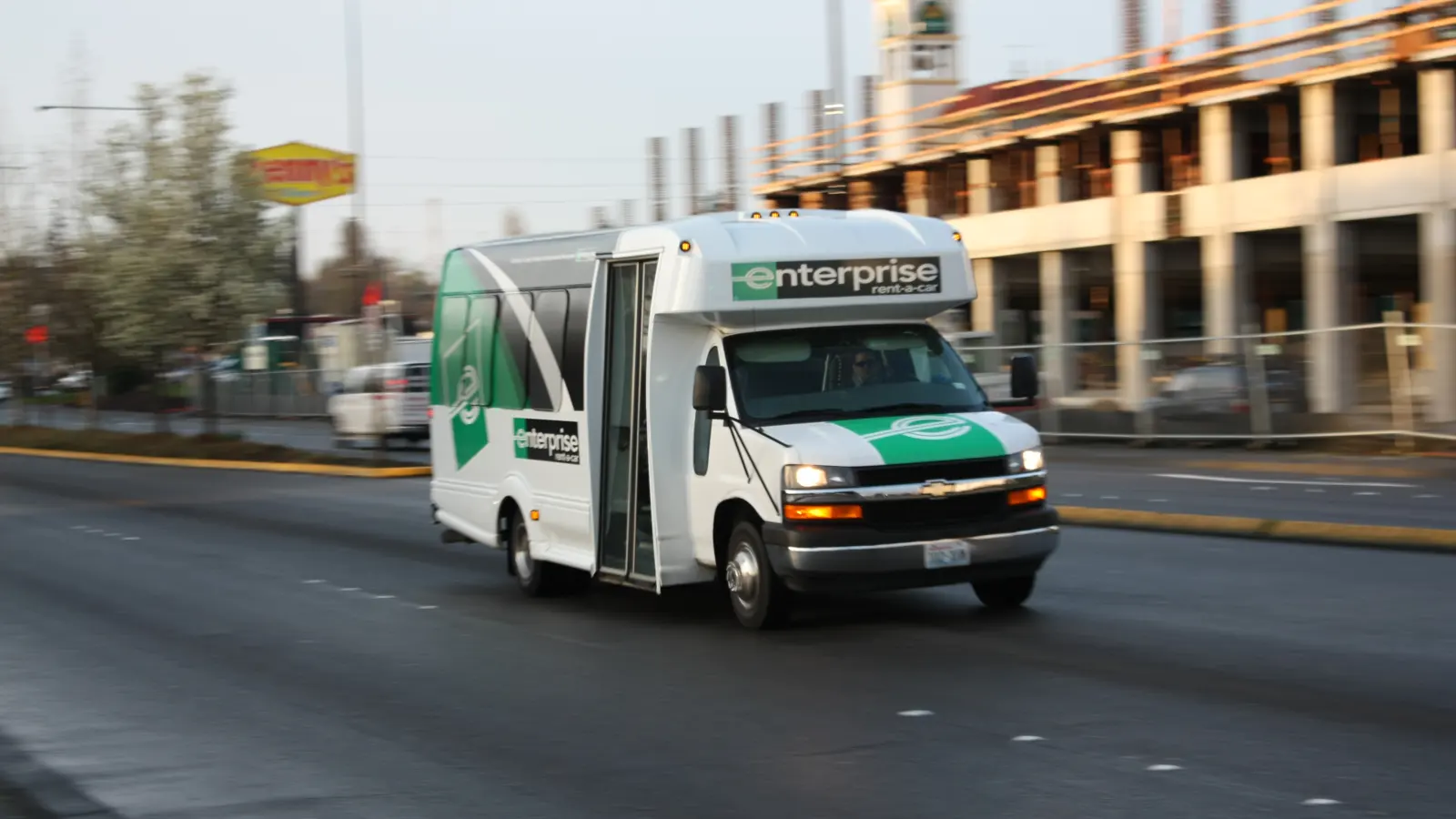
Cover photo: “Enterprise Rent-A-Car” by Atomic Taco, licensed under CC BY-SA 2.0. Cropped, resized, and converted to WebP; the adapted image is shared under the same license.
