A Million Ads Won't Buy You What Shokz Built in 18 Years
Shokz spent 18 years and 11 generations of technology on one problem: bone conduction. That focus, not ad spend, built a 70% share of the global sports headphone market. A teardown of what 'practicing the extreme' actually costs.

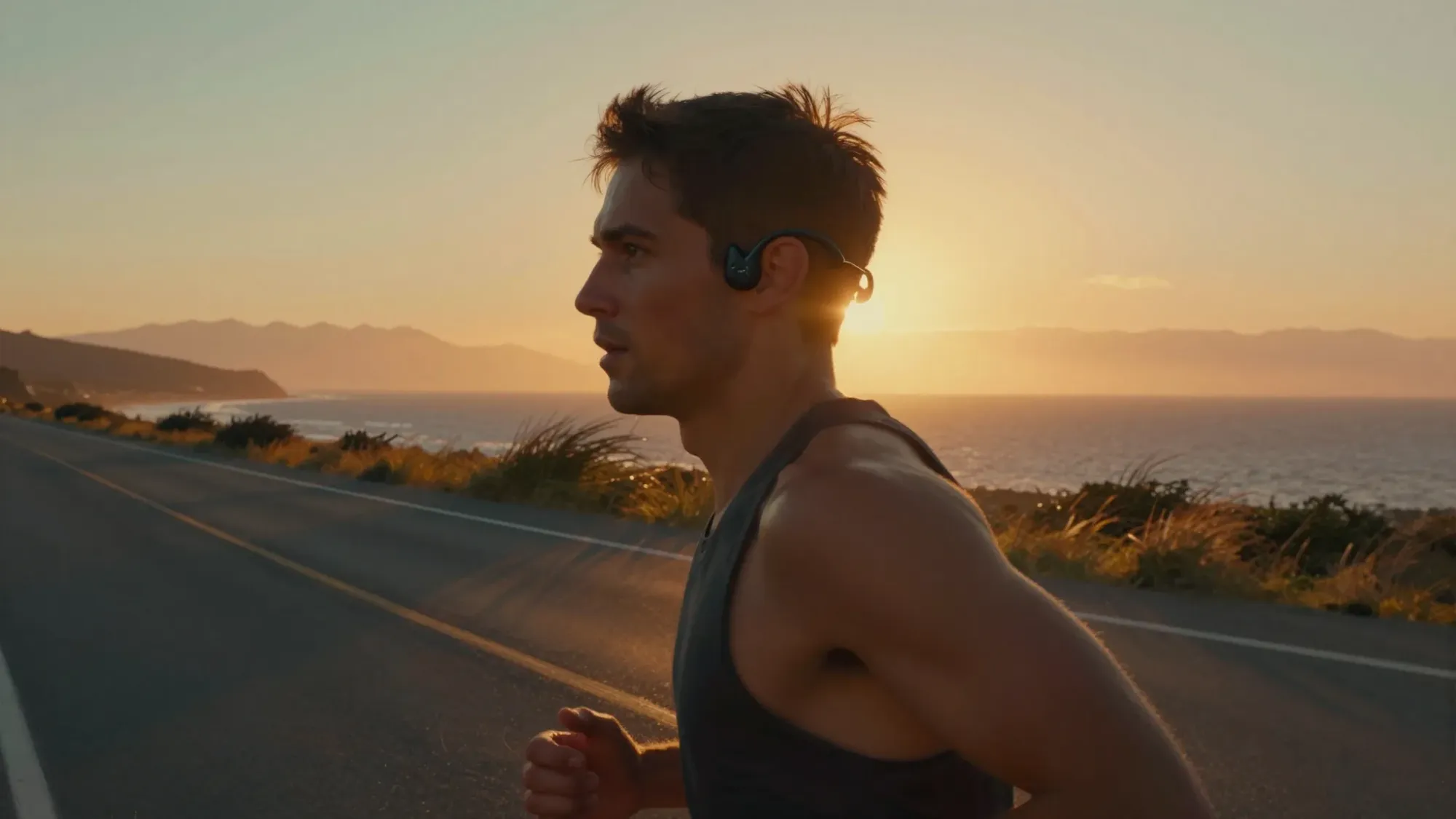
I came across a line in a video yesterday, from a Chinese video essayist who goes by Yichen:
“A million elevator ads and airport screens are worth less than one story you’ve stuck with for twenty years.”
A note for readers outside China: elevator-screen advertising is how Chinese consumer brands carpet-bomb a city. Nearly every office tower and apartment block has a screen in the elevator, and brands pour fortunes into them. Think of it as buying every bus shelter in Manhattan, at national scale.
Yichen compresses his definition of brand into four Chinese characters: 践行极致. The closest English I can get is “practice the extreme.” A brand’s value proposition, whether it’s health, freedom, or reliability, isn’t something ads shout into existence. It’s proven by a series of actions nobody else can copy.
I agree with every word of that. But an abstract truth that can’t immediately attach itself to a specific person and a specific company is just a clever sentence.
So this article does exactly one thing: fill those four characters with one Chinese brand that went global. I picked Shokz, the bone-conduction headphone company you’ve seen on every North American running trail. In 2024 it held roughly 70% of the global sports headphone market and crossed RMB 7 billion in annual revenue, close to a billion US dollars. The reasons follow.
The fork in 2007
The most overlooked moment in the Shokz story isn’t when it got popular. It’s the moment in 2007 when it decided to hurt itself.
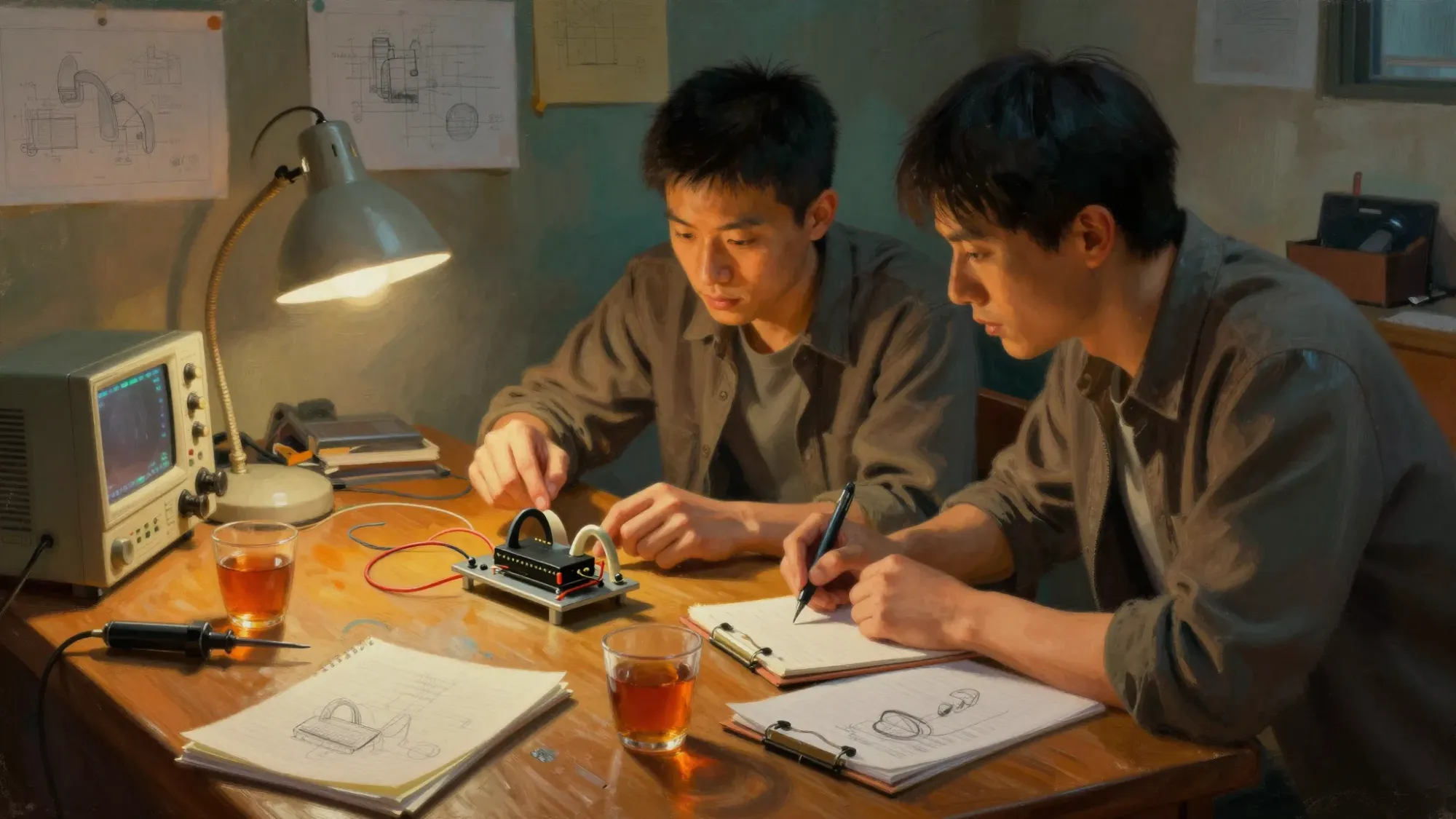
The company was founded in Shenzhen in 2004. The three founders, Chen Qian, Chen Hao, and Qi Xin, were classmates in mechanical engineering at Xi’an Jiaotong University who pooled RMB 250,000, about thirty thousand US dollars, to get started. For the first few years they did what everyone around them was doing: acoustic OEM work. Thin margins, no story, but you stay alive.
Then in 2007 they made a decision almost nobody endorsed at the time: all in on bone conduction.
Back then, bone conduction was close to a dirty word in consumer electronics. Poor sound quality, sound leakage, high power draw, and a vibration that made your scalp tingle. Four core flaws, none of them solved. The military and hearing-assistance markets used the technology, and not because it was good; those two scenarios simply had no alternative. Taking a technology people used only when they had no other choice, and carrying it into a consumer headphone market where you’d face Sennheiser, Bose, and Beats head on, looked to almost everyone like betting on a story with terrible odds.
Chen Qian and his cofounders bet anyway. And they bet in the dumbest possible way: pushing 15 to 20% of revenue back into R&D every year, and eating losses for years on end.
For today’s Huawei or ByteDance, 15 to 20% is a normal watermark. For a Shenzhen acoustic OEM startup, that ratio means the books never have a cushion. One misjudged product cycle, one supply chain wobble, one currency swing, and the company is out.
That isn’t investing in R&D. That’s pushing your entire stack of chips back onto the same table, over and over.
Time has no shortcut
Today, Shokz’s official material carries two numbers: 18 years, 11 generations of technology.
Eighteen years is the time from the bet to now. Eleven generations is the version number of the technology itself. Behind those two numbers sits the plainest rule there is: practicing the extreme has no shortcut, and no amount of money compresses it.
Anker spent 14 years on charging. DJI has spent close to 20 on flight control. What these brands share isn’t the size of their R&D budgets. It’s that they traded time for something nobody can buy: the right to keep evolving one specific technology against one specific problem.
That matters enormously for Chinese brands going global right now.
For the past decade, the dominant formula has been “domestic supply chain plus overseas ad amplifier”: flood the SKUs, buy the traffic, climb the Amazon rankings. Launch in three months, break out in six, clear tens of millions of dollars in year one. Its fatal weakness is that it’s copyable. Whatever you can do, the next wave can do too. Whatever speed you hit, a hungrier competitor will match it.
Shokz never bet on which SKU would pop. It bet on the evolution curve of bone conduction as a single problem. Eighteen years in, anyone who decides to enter today faces the engineering detail accumulated across eleven generations. Money doesn’t catch that.
Attention is scarcer than budget
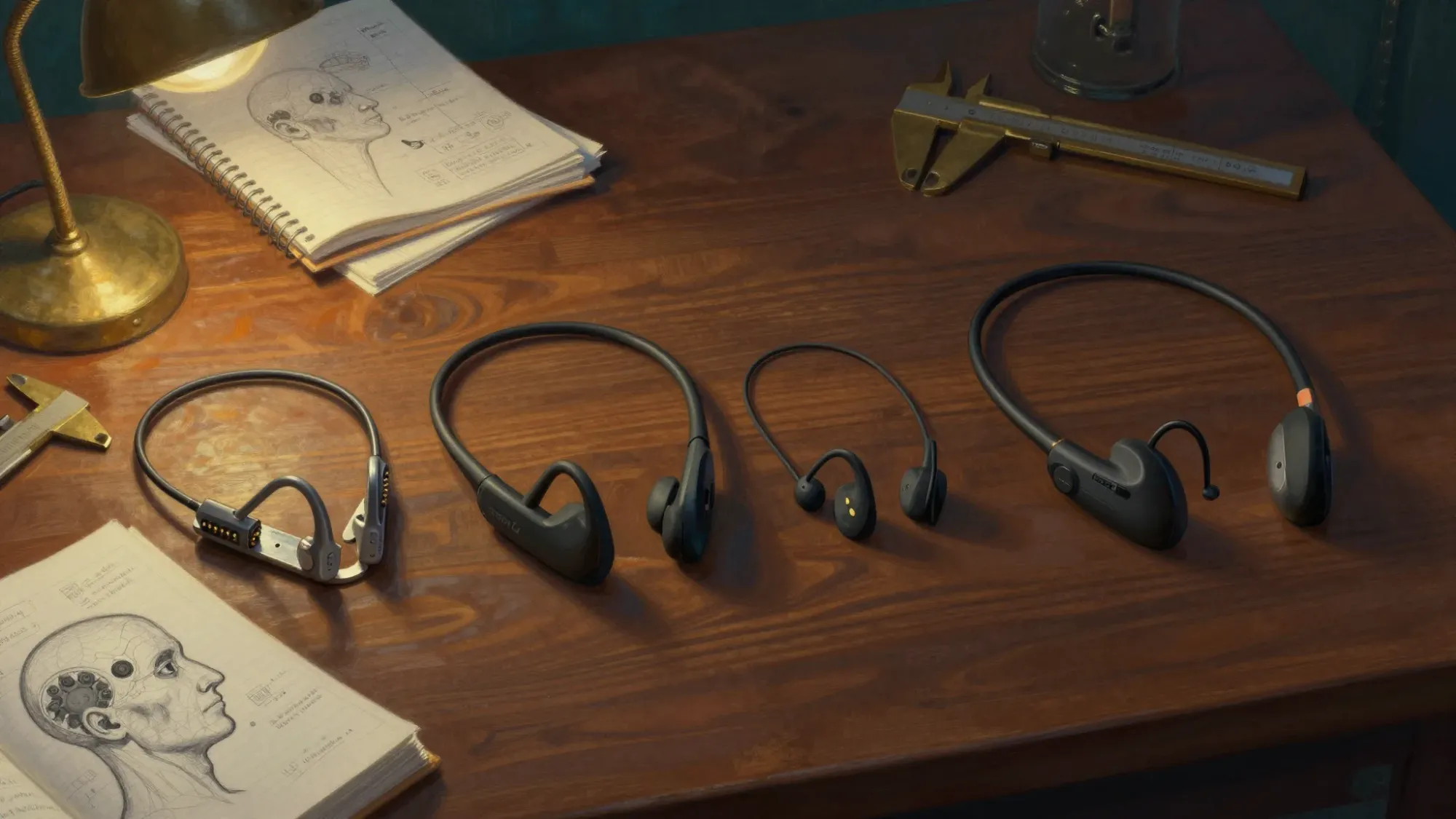
The industry consensus is that bone conduction has four core technical obstacles: sound quality, leakage, power, vibration. Almost everything Shokz has done for 18 years can be summarized by those four problems.
In 2024, the IP data firm IPRdaily published a global ranking of open-ear headphone invention patent applications. Shokz ranked first with 1,408 filings. Nearly all 1,408 point at those same four problems.
The patent count is not the moat. The patent count is a result. The real moat is that everyone from the CEO to the engineers to the product managers is thinking about the same thing: how does the next generation cut leakage by another 3 decibels, or stretch wear time by another 2 hours. That kind of organization-wide single-mindedness can’t be bought.
Overseas first, home later
There’s a detail in the Shokz story that most people studying Chinese brands skip past: it built its brand and opened its market abroad first, and only then came back to sell in China.
In 2011 it registered AfterShokz in the United States. In 2013 the AfterShokz Bluez debuted at CES in Las Vegas, presold at 99 dollars. North America’s running community caught it first. Only later did the brand flow back into China, and in 2021 it unified globally under the name Shokz.
That path is rare among Chinese consumer electronics brands. Most do China first and look abroad later (Xiaomi, early Anker), or push both at once (SHEIN).
Why did Shokz run it in reverse? If you only look at the outcome, you land on “the US market was more mature.” That explanation is too shallow. My read is that Shokz chose North America not for the market itself but for a user group it needed.
The first real demand for bone-conduction headphones was never “listening to music.” It was “running while keeping your ears open to the world.” North America has a distinctive runner subculture: weekend road clubs, long-distance trail running, marathon training groups. These people spend long hours outdoors, want music or podcasts along, and need to hear the car coming up behind them. That is a hard-need user base for open-ear headphones.
China’s running market hadn’t formed that group in 2011. Even the mass marathon boom didn’t really arrive until around 2014 or 2015. If Shokz had launched in China first, it would have collided with users who fundamentally didn’t get why anyone would want a headphone that doesn’t go in the ear. However extreme the technology, nobody pays for an extreme they can’t feel.

The extreme by itself isn’t enough. The extreme has to find the user group that can feel the difference.
For Chinese brands going global today, that lesson matters more than “go global” itself.
Don’t default to China as the launch market. If your product rests on a usage scenario Chinese users haven’t converged on yet, launching abroad first is actually the shorter path.
Find the users who understand the extreme, not the largest possible user base. What Shokz won among North American runners in 2013 wasn’t sales volume. It was a word-of-mouth gene. Everything that came later grew out of that gene.
The real value of a launch market is feedback quality, not transaction volume. A runner who has worn your product for two straight months and tells you “it starts pinching my head around minute 90” is worth ten thousand five-star reviews on Amazon.
Today
Revenue in 2024: about RMB 7 billion. Global sports headphone share: about 70%. First worldwide in open-ear headphone patent applications. Time from founding to crossing the profitability line: over 10 years.
The numbers themselves aren’t the point. The relationship between them is: a company lost money for over a decade, then became the 70%-share leader in a category nobody else can get into.
The textbook says a leader at 70% share should have been run down by fast followers, hit by substitutes, and squeezed by capital long ago. Shokz is doing fine. And it’s doing fine for exactly one reason: 18 years ago it picked something that other companies, deciding to chase today, can no longer catch.
What you can take with you
Not every category deserves this kind of grind toward the extreme. To judge whether yours does, ask one question: can a new user feel the difference between you and the competition within 30 seconds? Bone conduction versus in-ear is a difference 30 seconds can settle. A 10-watt gap between two nearly identical power banks is not.
Pick your launch market for comprehension, not size. Defaulting to the US is inertia; defaulting to China is playing it safe. The real question is: which user group in the world is best equipped to understand the core 1% difference in your product?
Patents are a byproduct. Companies that make patents the KPI produce piles of defensive patents. Companies that make one concrete problem the KPI produce a moat competitors can’t route around. The two look identical on paper and are nothing alike underneath.
Yichen has one more line worth quoting:
“Either you spend your life discovering the extreme, or you spend it becoming the extreme. The first earns you traffic. The second makes you a brand.”
Shokz chose the second.
Sources
- Yichen (精神思考), “Stop Researching Topics” video, 2026-04
- China Daily, on R&D and IP protection behind Shokz’s bone-conduction success, 2021-04
- Sina Finance, “Three engineering grads, RMB 250k in seed money, RMB 7 billion a year in a niche category”
- WIPO Magazine, Shenzhen Shokz: Bone Conduction Technology
- Engadget, AfterShokz to debut Bluez at CES 2013
- IPRdaily, 2024 global ranking of open-ear headphone invention patent applications
FAQ
What does “practice the extreme” mean?
“Practice the extreme” (践行极致) is a definition of brand proposed by Chinese video essayist Yichen: a brand’s value proposition isn’t shouted into existence by advertising; it’s proven by a series of actions nobody can copy. Ad budget doesn’t decide the brand. Time multiplied by focus does. Shokz, Anker, and DJI all represent this path.
What kind of company is Shokz, exactly?
Shokz was founded in Shenzhen in 2004, went all in on bone conduction in 2007, registered the AfterShokz brand in the US in 2011, and unified globally under the name Shokz in 2021. In 2024 it held roughly 70% of the global sports headphone market, crossed RMB 7 billion in annual revenue, and ranked first worldwide in open-ear headphone invention patent applications (1,408 filings, IPRdaily 2024).
Why did Shokz launch overseas before selling at home?
In 2011, China’s running market hadn’t yet formed a user group that wanted to run while staying able to hear the world. North America’s running community had a mature long-distance outdoor culture and could immediately understand the value of open-ear headphones. Shokz picked North America not because the market was big, but because the users who could feel the product’s difference were there.
Which categories deserve “practicing the extreme”?
The test is one question: can a new user feel the difference between you and the competition within 30 seconds? Bone conduction versus in-ear passes in 30 seconds and is worth the grind. A 10-watt gap between two nearly identical power banks can’t be felt, and nobody will pay for it.
What should Chinese brands going global take from this?
Three things. Don’t default to China as the launch market; find the user group that best understands your product’s core 1% difference. Set R&D KPIs on concrete problems (like “cut leakage by another 3 dB”), not on patent counts. And trade time for evolution rights nobody can buy, instead of trading money for short-term growth.
Adam Yang | 10+ years in China-to-global expansion · Independent consultant 中文版: 投 100 万电梯广告,不如 Shokz 18 年只做一件事